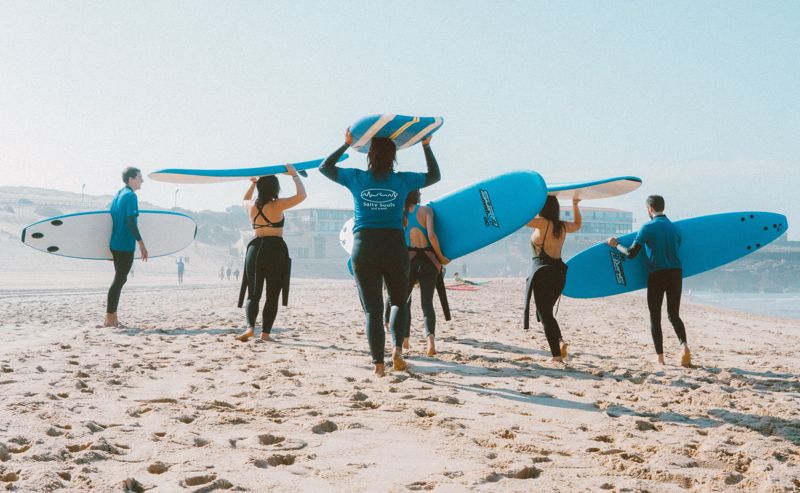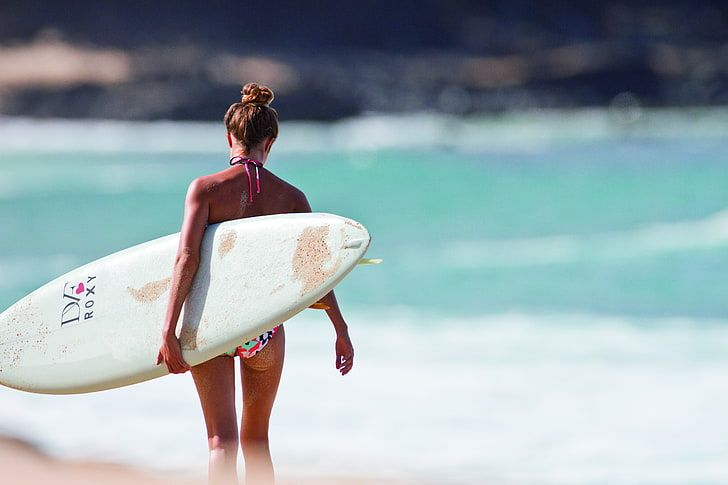
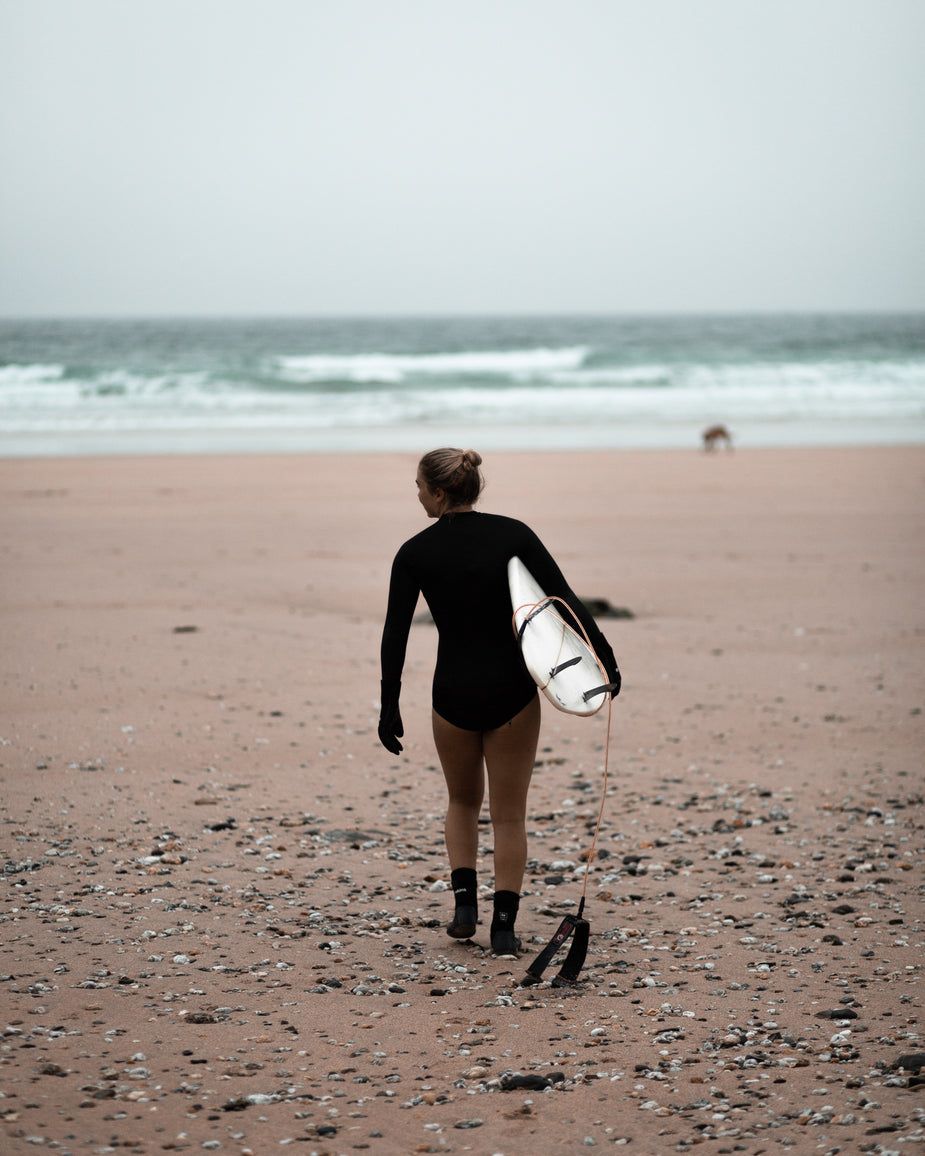
A wetsuit is the single piece of gear that decides whether your session lasts forty minutes or three hours. Get it right and you forget you are wearing it; get it wrong and you spend the whole time cold, sore under the arms and adjusting a collar that flushes icy water down your back. This guide walks you through every decision — thickness, cut, entry system, seams and fit — with the specific things women should look for.
Why a women's cut really matters
For years, many surf brands simply shrank their men's patterns and printed them in brighter colours. The result was suits that were too long in the torso, too tight across the chest and too loose at the small of the back. Those gaps matter: every pocket of space fills with water, and every time you duck-dive or wipe out that water is flushed out and replaced with fresh, cold ocean.
A modern women's pattern is built on a female body block. In practice that means:
- A shorter torso so the suit does not bunch at the waist when you stand up.
- Shaped chest panels that allow you to breathe deeply while paddling without compression.
- A defined waist and wider hip panel so the lower back sits flush against your skin.
- Narrower shoulders and slimmer arms to reduce the baggy "wings" that catch water under the armpit.
If you have tried on a unisex suit and thought "wetsuits just aren't made for my body", try a women-specific cut before you give up. The difference is usually immediate.
Thickness and water temperature
Wetsuit thickness is written as two or three numbers, for example 3/2 or 4/3. The first number is the thickness in millimetres across the torso, where you need the most warmth. The second is the thickness in the arms and legs, where you need the most flexibility. Some suits add a third number for a thinner shoulder panel.
| Water temperature | Suggested suit | Typical extras |
|---|---|---|
| Above 24 °C / 75 °F | Rash guard, bikini or 1 mm top | UV leggings, reef boots |
| 19–24 °C / 66–75 °F | 2/2 mm shorty or long-sleeve spring suit | Neoprene top for windy days |
| 16–19 °C / 61–66 °F | 3/2 mm full suit | Optional 2 mm boots |
| 12–16 °C / 54–61 °F | 4/3 mm full suit, chest zip | 3 mm boots, optional gloves |
| Below 12 °C / 54 °F | 5/4 or 6/5 mm hooded suit | 5 mm boots, 3–5 mm gloves, hood |
These ranges are a starting point, not a law. Wind, air temperature and how long you stay out all change the picture. Many women also report feeling the cold more than their male surf buddies — that is completely normal and linked to differences in body composition and circulation. If you know you are a "cold person", go one step warmer. You can always get out when you are hot; being cold ends sessions and ruins your technique.
Shorty, spring suit or full steamer?
Shorty
Short arms and short legs, usually 2 mm. Perfect for warm summer water and for anyone who loves freedom of movement. The downside is less sun protection — remember sunscreen on your legs.
Long-sleeve shorty (spring suit)
Our personal favourite for spring and early autumn. Long sleeves keep your arms warm and protect them from sunburn and board rash while short legs keep paddling and pop-ups light. The ION Amaze Shorty 2.0 is a great example of a women's cut spring suit.
Full suit (steamer)
Full-length arms and legs, 3/2 mm and thicker. This is the workhorse for most of the year in temperate climates. A good 3/2 will cover you for more days than any other suit.
Hooded suit
For winter surfing in cold water. An integrated hood seals the neck far better than a separate hood and stops "ice-cream headaches" when you duck-dive.
Back zip, chest zip or zipless?
The entry system affects how warm a suit is, how easy it is to put on and how much it stretches.
- Back zip — a long zipper down the spine. It is the easiest to get in and out of, especially when you are cold and tired, which makes it ideal for beginners and for travel. The trade-off is a little more flushing and a stiffer back panel.
- Chest zip (front zip) — you step in through the neck opening and close a short zipper across the chest. Warmer, less flushing and noticeably more stretch across the shoulders. It takes some practice to get into.
- Zipless — the most flexible and sealed design, but also the trickiest to get on and off. Best for experienced surfers who want maximum performance.
If you have long hair, a chest zip is a small bonus: there is no back zipper for hair to get caught in.
Seams and neoprene quality
Look closely at the stitching on the outside of the suit.
- Flatlock seams look like a flat ladder of stitching. They are comfortable and strong, but let a little water through the needle holes — ideal for summer suits of 2 mm or less.
- Glued and blind-stitched (GBS) seams are glued first, then stitched without the needle going all the way through. They are watertight and the standard for 3/2 mm suits and up.
- Taped or liquid-sealed seams add an internal tape or external rubber bead on high-stress areas for extra warmth and durability in cold-water suits.
Modern neoprene is also far stretchier than it used to be. Limestone-based and recycled neoprenes are lighter and more environmentally friendly than older petroleum-based foams. Thermal linings on the chest and back add warmth without extra thickness.
How to check the fit in the changing room
The perfect wetsuit is snug everywhere with no gaps, yet lets you move freely. Try these checks before you buy:
- Put it on properly. Pull the legs all the way up before you work on the torso, and pinch the neoprene upwards in sections — never yank from the collar. Plastic bags over your feet and hands make it slide on more easily.
- The lower back test. Place your hand on the small of your back. If you can pinch a fold of neoprene, water will pool there. A women's cut usually solves this.
- Arms up. Raise both arms overhead and rotate them as if paddling. You should feel resistance, but not have the suit pulling your shoulders down.
- The squat. Squat down as if popping up. The crotch should not hang low and the knees should not pull.
- The collar. It should sit close without choking you. You should be able to slip one finger between collar and neck, no more.
- Wrists and ankles. Cuffs should sit just at the wrist bone and just above the ankle bone.
A dry wetsuit always feels tighter than it will in the water. Neoprene relaxes when wet and warm — if it is slightly snug in the shop, it is probably perfect in the sea.
Use our interactive size guide to find your starting size based on height and weight, and remember that brands vary. If you are between sizes, choose the smaller size for cold water (warmth matters most) and the larger for warm water (freedom matters most).
Boots, gloves and hoods
When water drops below around 15 °C, your hands and feet are the first things to go numb. Thin 2–3 mm boots keep your feet warm and protect them from rocks and urchins. Gloves are a matter of personal choice — many surfers find that half-finger gloves such as the Prolimit Shortfinger HS Mesh are a good compromise on chilly spring mornings, because they add warmth and blister protection without losing the feel of the rail.
Caring for your wetsuit
A wetsuit is an investment. These habits will make it last for years:
- Rinse it inside and out in cool fresh water after every session. Salt crystals break down neoprene fibres.
- Never use hot water — it can dissolve the glue in the seams.
- Dry it inside-out first, out of direct sunlight. UV makes neoprene brittle and fades colour.
- Hang it folded over the waist on a wide, padded hanger, never from the shoulders, which stretches them.
- Use a dedicated wetsuit shampoo every few weeks to remove smells.
- Do not leave it in a hot car boot for days.
- Repair small nicks straight away with neoprene glue before they grow.
Quick summary
Choose your thickness from your local water temperature, go warmer if you feel the cold, pick a back zip if you are new to surfing and a chest zip for more warmth and stretch, and always prioritise a women's cut that fits snugly at the lower back. Do that and your wetsuit will become the most loved piece of gear you own.
Frequently asked questions
Snug everywhere with no loose folds or air pockets, but you should be able to breathe deeply, raise your arms overhead and squat without the neoprene pulling you back. Expect it to feel tighter dry than it will in the water.
You can, but most women find men's suits gape at the lower back, pinch across the chest and are too long in the torso. A women's cut is warmer because water cannot collect in those gaps.
Most women wear a bikini or a one-piece swimsuit. Choose seamless styles without hardware — metal rings and thick straps can rub under neoprene.
With good care, two to four seasons of regular surfing. Rinsing in fresh water, drying in the shade and storing flat or folded over a wide hanger doubles its life.