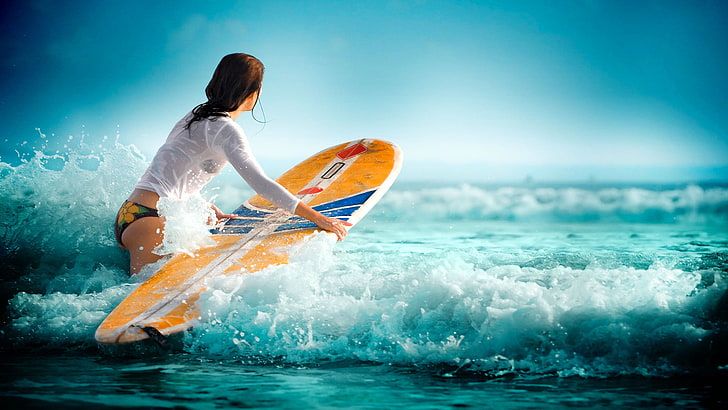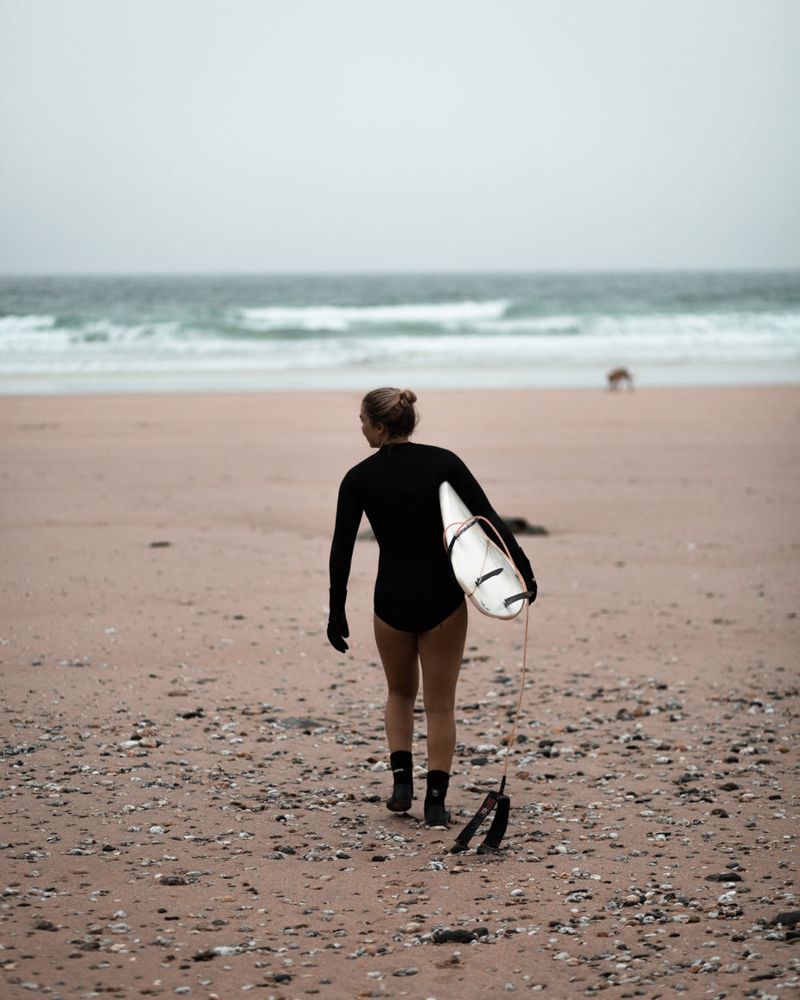

Surfing means hours of direct sun, reflected glare from the water, salt, wind and sand. That combination can age skin faster than almost any other sport and leave hair dry and brittle. The good news: a simple routine keeps you protected without spending an hour in the bathroom. Here is everything we have learned about looking after your skin and hair as a woman who surfs.
Why surfers need extra protection
Water and wet sand reflect a significant share of UV rays back up at you, so you receive radiation from above and below. Water also cools your skin so you do not feel yourself burning. Add wind that dries skin and salt that draws out moisture, and it is easy to see why surfers are prone to sunburn, dark spots and premature lines around the eyes. Consistent protection is one of the best long-term investments you can make.
Choosing a surf sunscreen
Look for these four things on the label:
- Broad spectrum — protects from both UVA (ageing) and UVB (burning) rays.
- SPF 30–50 — SPF 50 for your face, ears and nose.
- Water resistant (80 minutes) — the highest water-resistance claim allowed in many countries.
- Reef-conscious formula — mineral filters such as non-nano zinc oxide or titanium dioxide, and no oxybenzone or octinoxate.
Thick zinc sticks are the surfer's secret weapon for the face. They stay on for hours, protect sensitive areas like the nose and cheekbones, and are available in skin tones as well as the classic white.
UV clothing: the easiest protection
Fabric is more reliable than sunscreen because it cannot wash off. A long-sleeve rash guard, swim leggings or a long-sleeve spring suit covers most of your body. Our favourite warm-water set-up is a long-sleeve shorty like the ION Amaze Shorty 2.0 — it keeps your arms protected while leaving your legs free. Add a surf cap with a chin strap for long sessions, and thin gloves such as the NeilPryde Amara protect the backs of your hands, which are often forgotten.
The spots everyone forgets
- Tops of the ears and behind the ears
- The back of the neck and the parting line in your hair
- The backs of the knees and the tops of the feet (you lie on your board for hours!)
- Lips — use a lip balm with SPF and reapply often
- The skin around the edges of your swimsuit and wetsuit

Timing is protection too
UV radiation is strongest between roughly 10 am and 4 pm. Dawn patrol and sunset sessions are kinder to your skin — and are often less crowded, with glassy conditions. Check the UV index in your weather app and plan longer sessions for lower-UV times of day.
Your after-surf routine
- Rinse. Rinse your face and body with fresh water as soon as possible to remove salt and sand.
- Cleanse gently. Use a mild, non-foaming cleanser or micellar water to remove sunscreen. Oil cleansers are great for thick zinc.
- Hydrate. Apply a hydrating serum (hyaluronic acid or glycerin) on damp skin.
- Soothe. Aloe vera or a moisturiser with ceramides and niacinamide calms wind-burnt skin.
- Protect again. If you stay outdoors, re-apply a daily SPF.
Once or twice a week, a gentle exfoliant (lactic or mandelic acid) helps with the dullness that salt and sun can cause. Avoid strong retinoids and exfoliants the night before a long sunny session.
Salt-water hair rescue
Salt water and sun lift the hair cuticle, which leads to frizz, tangles and faded colour. Try this routine:
- Before: wet your hair with fresh water — hair absorbs less salt when it is already saturated. Then apply a leave-in conditioner or a few drops of coconut or argan oil.
- During: a low braid reduces tangles far more than a ponytail. A surf cap protects colour-treated hair.
- After: rinse with fresh water, then use a gentle sulphate-free shampoo and a rich conditioner. Detangle from the ends upwards with a wide-tooth comb.
- Weekly: a hair mask or oil treatment restores moisture.
Eyes and lips
Long-term glare can cause surfer's eye (pterygium), a growth on the white of the eye. Wear good polarised sunglasses on the beach and in the car park, and consider surf-specific sunglasses with a strap for long sessions in bright conditions. Keep a lip balm with SPF in your wetsuit key pocket.
Check your skin
Keep an eye on moles and spots. Use the ABCDE rule — asymmetry, irregular border, several colours, diameter over 6 mm, evolving shape — and see a dermatologist once a year if you surf regularly. This article is general information and not medical advice; always follow the recommendations of your doctor.
Your skincare surf kit
- Mineral SPF 50 face stick and SPF 30–50 body lotion
- Lip balm with SPF
- Leave-in conditioner or hair oil
- Micellar water and reusable cotton pads
- Aloe or a soothing moisturiser
- Wide-tooth comb and hair ties
- Quick-dry towel, like our microfiber surf towel
Frequently asked questions
Use a broad-spectrum, water-resistant SPF 50 on your face and SPF 30–50 on your body. Reapply every 80 minutes of water time or after towel-drying.
It usually means the sunscreen avoids chemical UV filters such as oxybenzone and octinoxate, which have been linked to coral damage. Mineral sunscreens with non-nano zinc oxide are the most common alternative.
Wet your hair with fresh water and apply a leave-in conditioner or a few drops of oil before surfing, then rinse and condition soon after you get out.
Tinted mineral sunscreens and a water-resistant brow gel are enough for most women. Heavy foundation clogs pores under sunscreen and sweat.